



Share
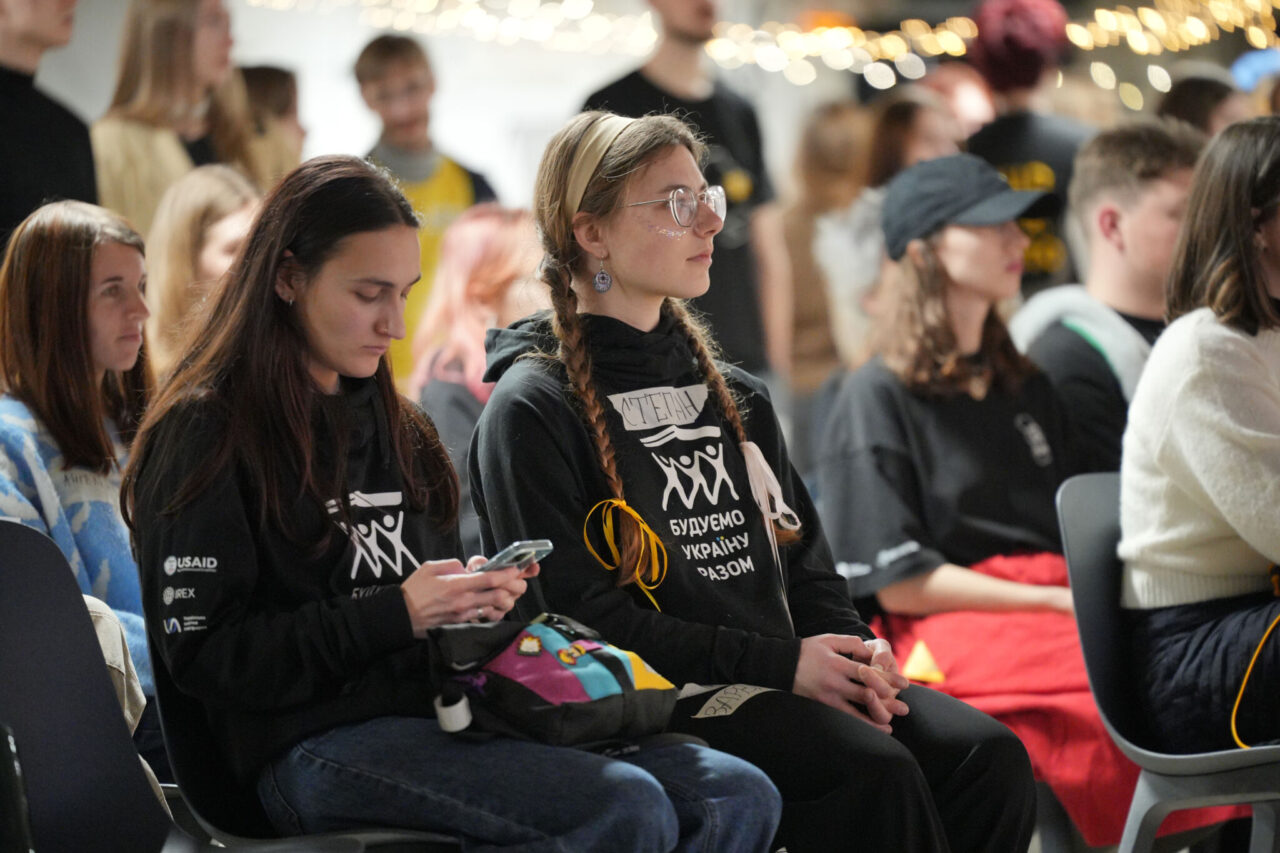
“The full-scale invasion began in February 2022. And that’s when BUR experienced very rapid, unorganic scaling. In January 2022 we had 12 people on the team — by January 2023, there were almost 70 staff members,” recalls Marta Benyshyn, Head of the NGO Buduyemo Ukrainu Razom (BUR — Building Ukraine Together).
Today, BUR is a network of over 10,000 volunteers, three regional offices (North, South, East), and 11 hubs across Ukraine — from Odesa to Kharkiv, from Lviv to the border communities of Sumy Oblast. But behind this lies a difficult journey: from chaotic growth during the first months of the full-scale war to an attempt to build systematic, sustainable operations.
The consequences of rapid growth became especially felt in 2024–2025: challenges with internal communication, team coordination, and supporting a large, dispersed network. That’s when the organisation joined the Institutional Development Program within the Phoenix: The Power of Communities project, implemented by East Europe Foundation with financial support from the European Union.
Strategy as an Anchor
When BUR joined the Institutional Development Program, one of its primary needs was strategic planning. The organisation’s previous strategy was coming to an end, but 2025 proved particularly turbulent: funding difficulties forced the team to sharply reprioritise, and several program areas were significantly scaled back.
“It was important for us to regroup as a team and talk through where we’re heading next. After a very crisis-ridden and turbulent period, the strategy became a kind of anchor: we now have a clear path forward, and the team feels more confident,” says Marta Benyshyn.
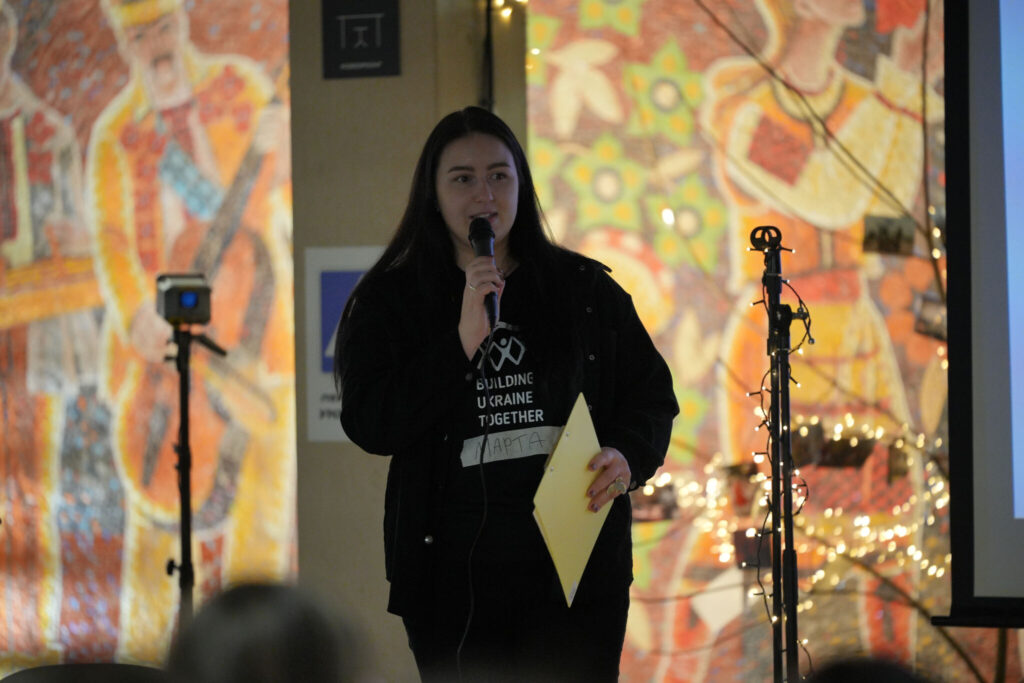
The outcome of the strategic planning process was not just new documents, but real changes in the organisation’s structure. From the new year, BUR completely changed its organisational logic: more projects are now initiated bottom-up — from hubs and initiative groups rather than the central office. Two programs were removed entirely, one was conceptually reimagined, and a mobile youth work program was added. A dedicated focus on systematic work with universities was also established — as a new space for developing volunteer communities.
The process itself proved equally important: the strategy was developed not within a narrow circle, but through a cascading process that engaged the entire team.
Safety as a Basic Need “in the Field”
The second major request from hubs and regional offices was around safety. This is particularly relevant for BUR, as teams work across different regions of Ukraine, including communities located near the frontline or the border.
As part of BUR’s institutional development work, an in-person training on safety and volunteer management was held for nearly thirty participants from across Ukraine.
BUR does not only operate in relatively safe cities. The BUR-North team, led by Mykhailo Melnyk, runs activities in communities across Sumy, Chernihiv, Poltava, Kyiv, and Cherkasy oblasts — some located just a few dozen kilometers from the border. BUR-South, led by Olha Savchenko, works with communities in Mykolaiv, Kherson, and Kirovohrad oblasts. BUR-East, led by Olena Lupova, resumed operations in 2025 and now covers Kharkiv, Dnipropetrovsk, and Zaporizhzhia oblasts.
Before the training, each team had its own approach to safety — but these were largely intuitive.
“Before, we also knew some things, but it was all fairly chaotic,” Mykhailo Melnyk summarises briefly.
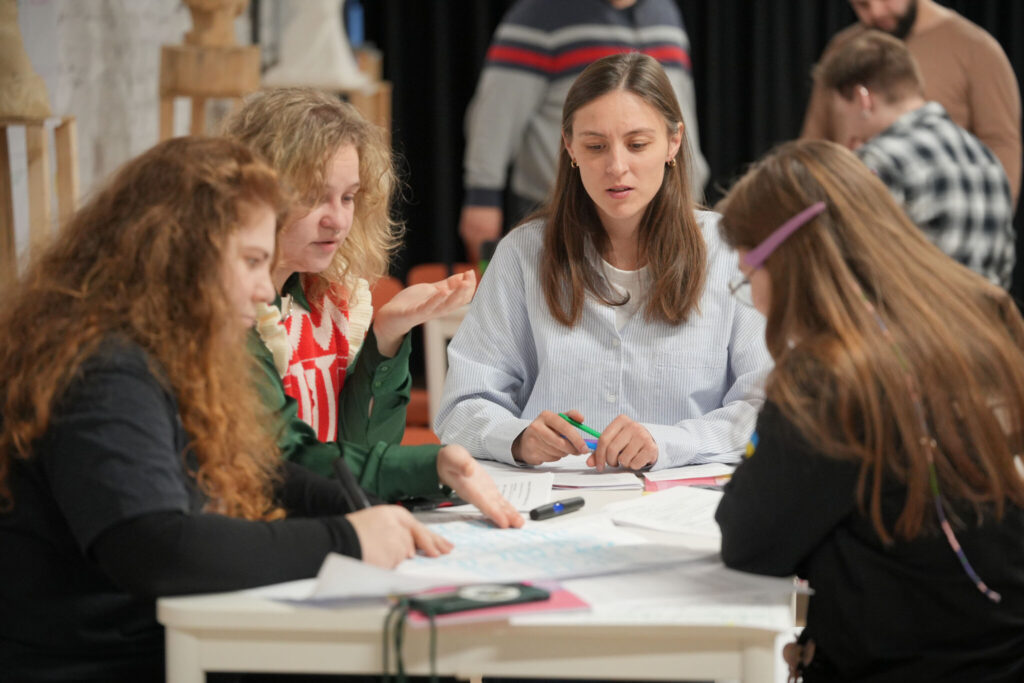
Olha Savchenko recalls that even before the training, many questions arose: “We realised it was very important for us to talk about safety. We had our own internal protocols, but there were so many questions: did we account for everything, did we write it up correctly, should we consult someone else?”
The training helped shift from gut feeling to clear procedures. The decision was made: rather than creating one unified instruction for everyone, to develop a base policy and separate protocols for each hub depending on its working conditions.
BUR is now working to ensure that by October, all 11 hubs will have their own document packages with clearly designated safety officers on the ground.
Mykhailo Melnyk describes how daily practice has changed: “Now all these practices are ongoing: we analyse risks, assess communities, check shelters, look at the strike map, evaluate logistics — and only then make a decision about whether a camp will be set up there or whether we’ll run any activities at that location.”
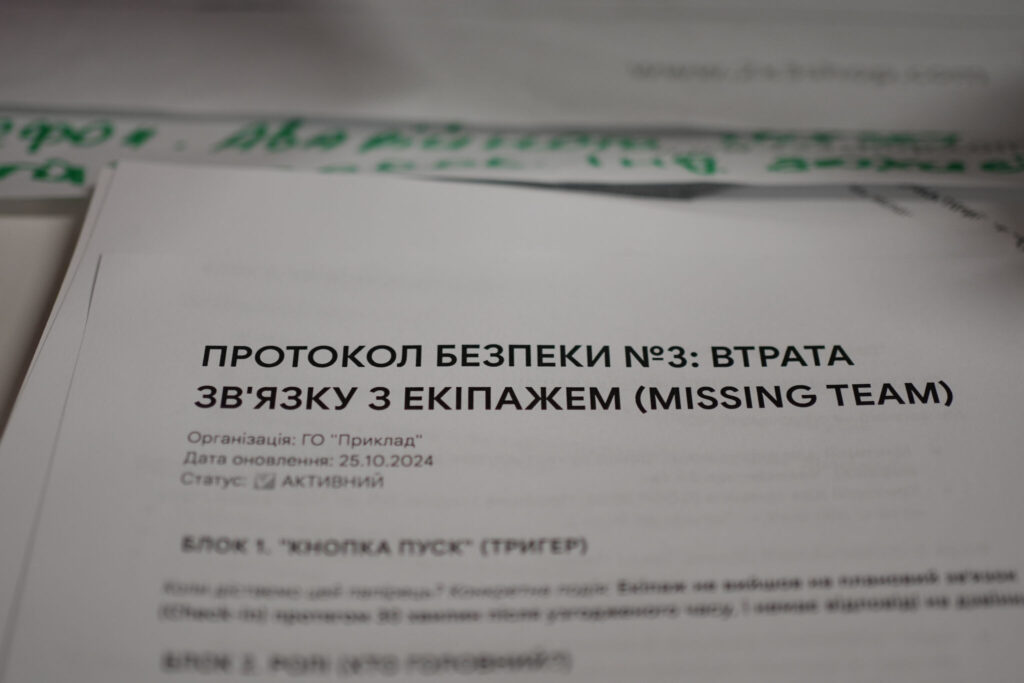
Olena Lupova, Head of BUR-East, says the shift happened at a deeper level: “Before, the work in this area was somewhat spontaneous, more based on feelings and intuition. Now we actually have this algorithm.”
One Voice for a Large Network
The organisation’s scaling raised another practical question: how to ensure that a network of 11 hubs and three regional offices looks and sounds like one organisation?
The answer was an updated brand book — but not merely as a set of rules about logos, colors, or fonts. For BUR, it was an attempt to capture and articulate how the organisation should sound and look: what the voice of a BUR member is, what values underpin its communications, and how to speak to volunteers, communities, and partners in a way that is distinctly recognisable as BUR.
This is especially important for a large, decentralised network where hubs and regional offices operate autonomously across different parts of Ukraine. The brand book helps them preserve space for local initiative while maintaining a shared tone and common framework.
“We Have Become More Mature”
All three areas — strategy, safety, and communicative coherence — come together to form a single picture: an organisation that has learned to grow not just quickly, but systematically.
“I think that’s exactly why BUR has become more mature. We understand that new challenges lie ahead, but now we approach them with much greater wisdom,” says Marta Benyshyn.