



Share
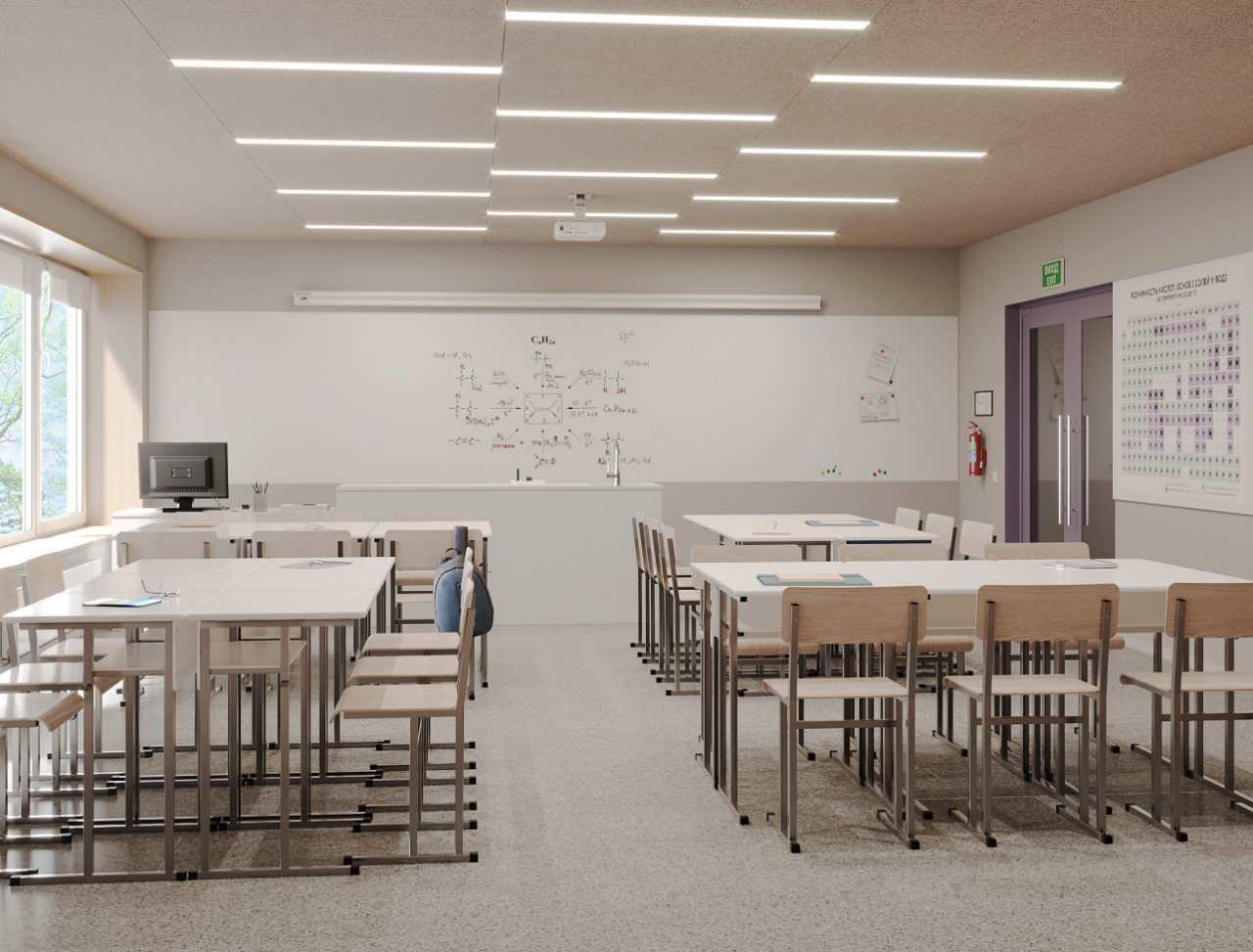
Modern STEM laboratories and classrooms are being established in 11 educational institutions across Dnipropetrovsk region. This is part of the state’s systematic investment in education and the modernization of school infrastructure.
The Modern Learning Spaces project aims to help educational institutions equip laboratories and classrooms according to unified approaches and guidelines developed for modern STEM education. The project covers 250 general secondary education institutions across 22 regions of Ukraine.
In Dnipropetrovsk region, renovation works are underway in 11 lyceums. The spaces are being actively prepared for the installation of the necessary equipment and their launch. In particular, at Kryvyi Rih Lyceum No. 119, mathematics, geography and robotics classrooms, as well as biology, chemistry and physics laboratories, are being renovated.
Olha Dobrovolska, principal of Kryvyi Rih Lyceum No. 119, says that the school selected a separate wing of the lyceum for the project in order to bring all STEM spaces together in one location and create a special environment for students to conduct research and experiments.
“Instead of conventional classrooms, we dream of having laboratories where every student can individually realize their potential, develop critical thinking, put theoretical knowledge into practice, work with the necessary equipment and see the results of their work firsthand,” says Olha Dobrovolska.
Zoya Beketova, a biology teacher at Kryvyi Rih Lyceum No. 119, believes that the renovated spaces will provide a strong practical component to education, creating more opportunities for students to experiment and work with laboratory equipment.
“It is important for today’s children to understand what they can achieve in science. They need to engage directly with the projects they are working on. Through practical sessions, research and experiments, students become active participants in the educational process. They want to develop in an innovative environment and immerse themselves in these processes. Therefore, project-based lessons using models and mechanisms will help them develop competencies that they can apply when choosing a profession and later use to contribute to the development of our country,” Zoya Beketova emphasizes.
It is also worth noting that during the implementation stage, when communities move from financing to the practical realization of a project, there is often a risk of losing the quality or pace of the work. That is why the project’s strategic partners — DTEK and Metinvest — supported the Implementation Support Team (IST), investing approximately UAH 11 million to ensure the high-quality implementation of the reform at the local level.
East Europe Foundation is responsible for the implementation and coordination of the project: it forms the IST team, provides expert and methodological support, and oversees quality control. Big City Lab developed the guidelines and design solutions.
The project is currently in the active implementation phase. Starting in September, the renovated spaces in Dnipropetrovsk region will gradually open their doors to students.
Modern Learning Spaces is a project supporting the introduction of modern educational spaces in academic lyceums across Ukraine. It is implemented by the Ministry of Education and Science of Ukraine as part of the World Bank’s “Enhancing Education Accessibility and Resilience in Crisis in Ukraine” (LEARN) program, funded, in particular, through the Ukraine Relief, Recovery, Reconstruction and Reform Trust Fund (URTF), in cooperation with East Europe Foundation and socially responsible Ukrainian businesses.
The project’s partners include DTEK and Metinvest, members of the SCM Group, as well as EPAM Ukraine and Quantum Systems Ukraine. Big City Lab provides consulting and expert support to educational institutions in implementing the project.