


Share
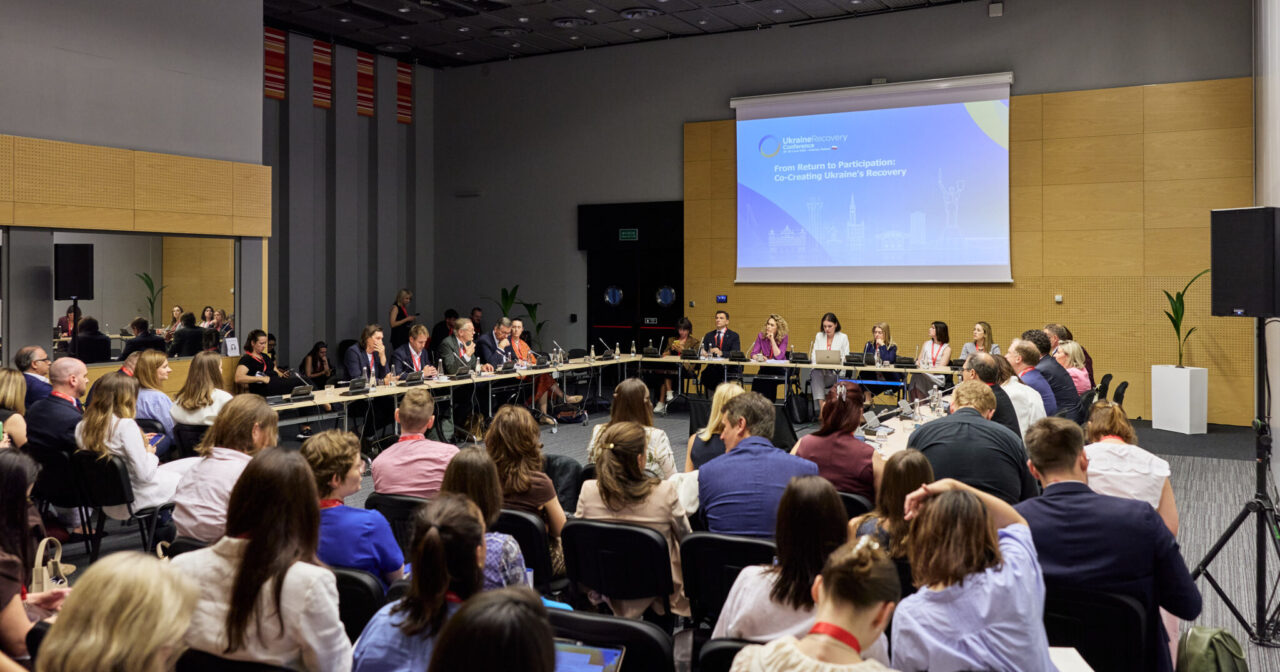
At the Ukraine Recovery Conference 2026, alongside discussions on infrastructure and reconstruction, culture is emerging as an essential and inseparable part of the recovery agenda.
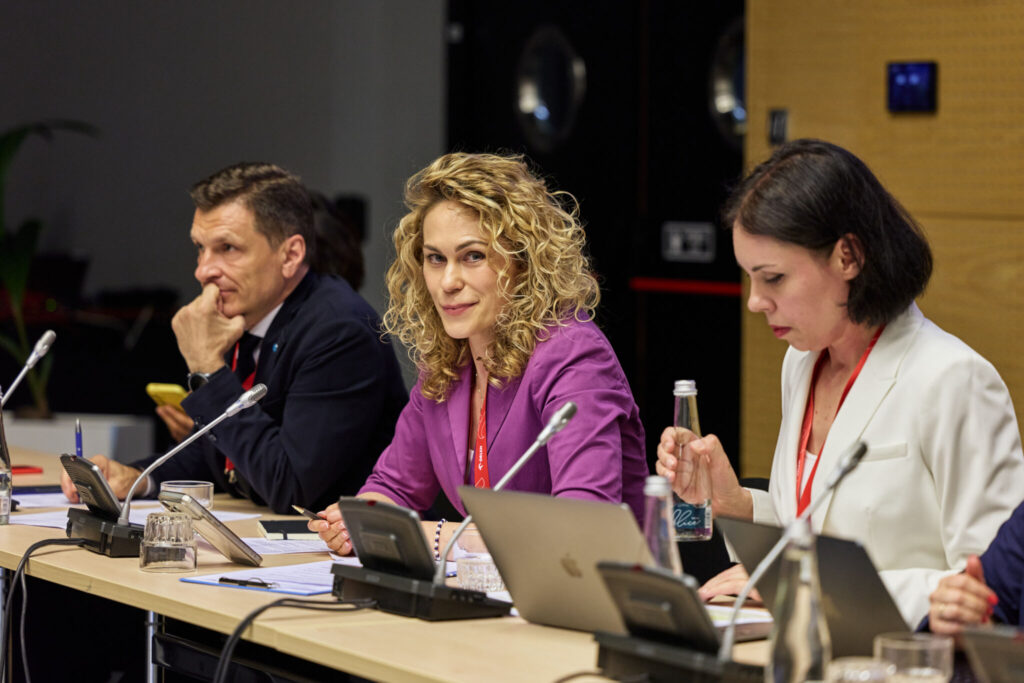
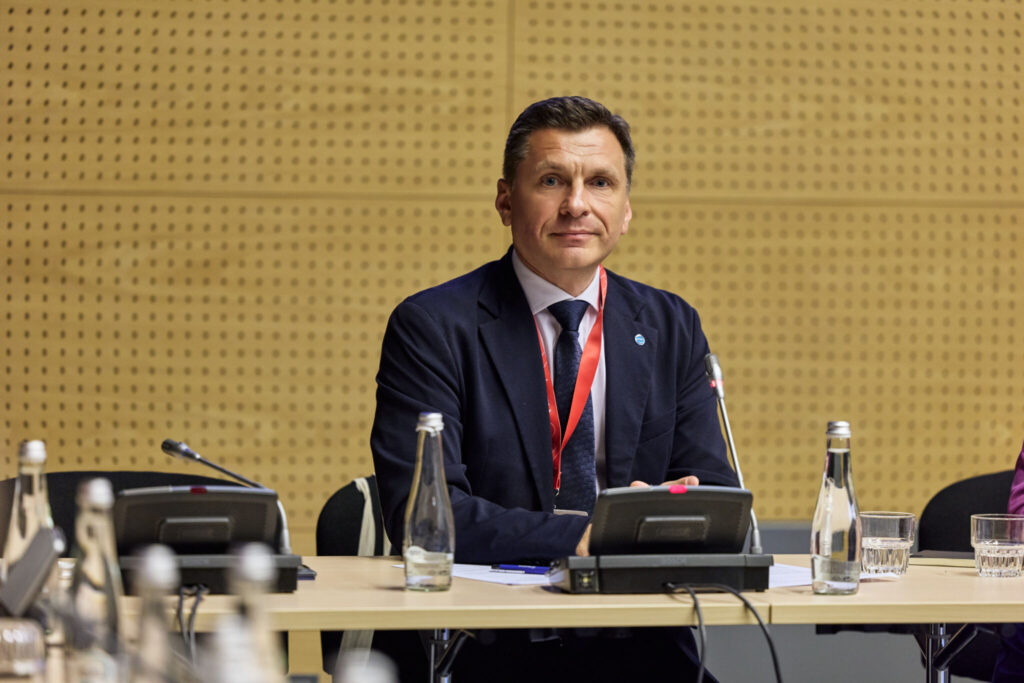
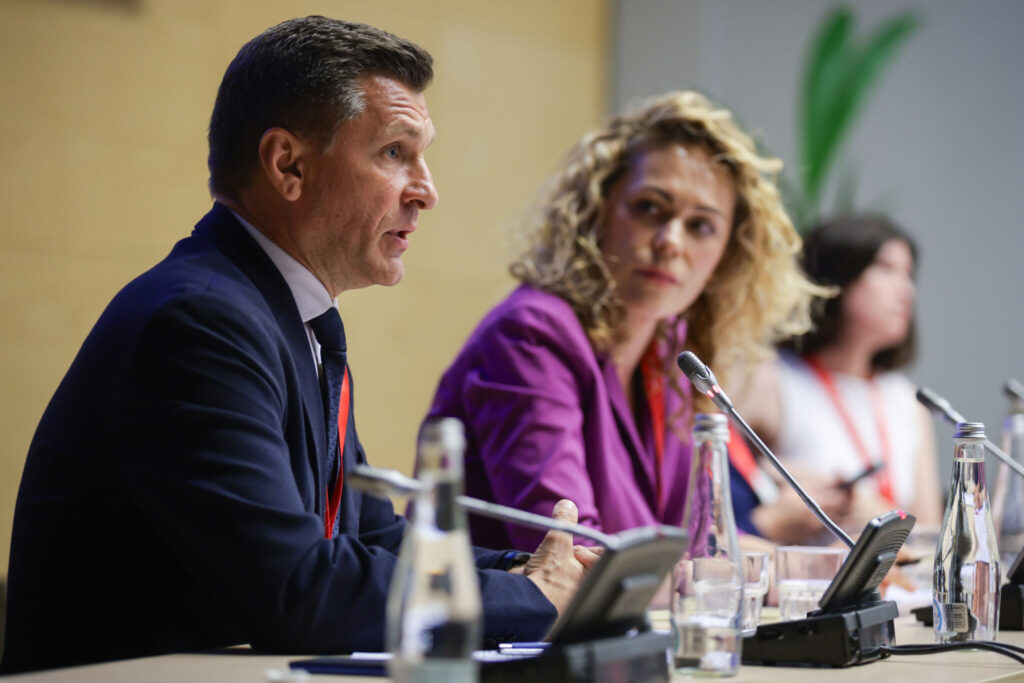
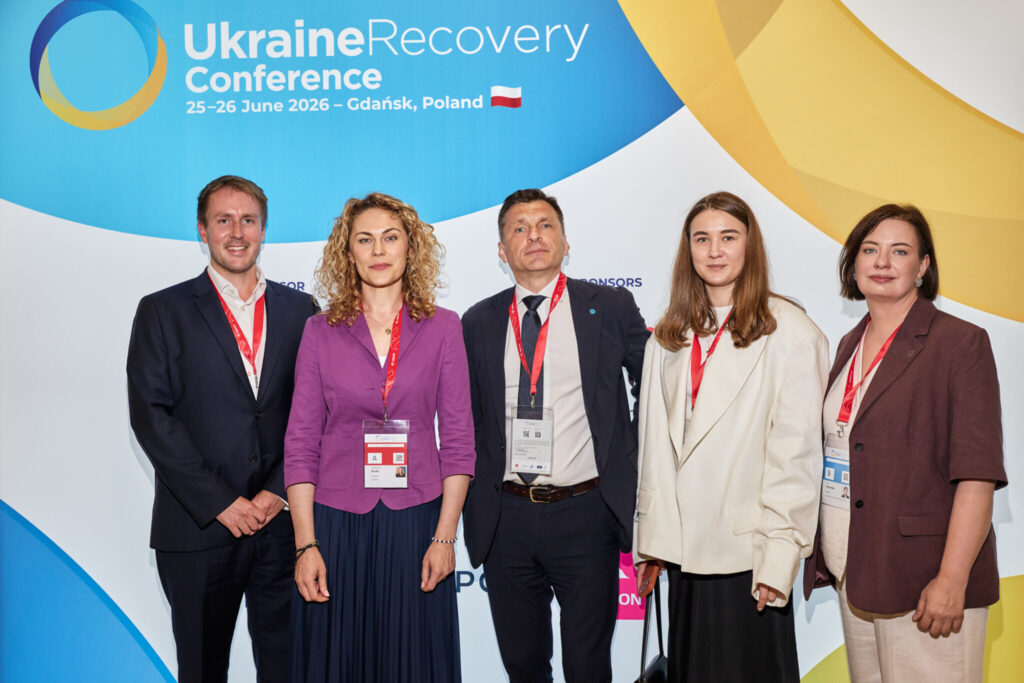
President of East Europe Foundation Victor Liakh took part in a panel discussion on the role of communities, culture, and social cohesion in recovery, held as part of the strategic workshop “From Return to Participation: Co-Creating Ukraine’s Recovery.”
The workshop was dedicated to rethinking the approach to recovery: the return of Ukrainians is not limited to physical relocation, but implies active participation in rebuilding – through work, education, communities, culture, and civic engagement.
As noted by the workshop moderator, Deputy Minister of Culture of Ukraine for Digital Development, Digital Transformations and Digitalization Anastasiia Bondar:
“We often measure recovery through investment, infrastructure, or employment. But its sustainability is also defined by trust, a sense of belonging, and the strength of communities. Work may help people return, but it is communities and culture that often help them stay. That is why culture and social cohesion are practical investments in Ukraine’s resilience and long-term recovery.”
The discussion also addressed the relationship between culture and innovation in sustainable recovery.
We tend to approach sustainable development through three dimensions: environmental, economic, and social. But when it comes to recovery, it makes sense to add a fourth – cultural. Culture cannot remain an “add-on” to development; it must be a full and equal part of it.
Culture shapes the substance of recovery – its meaning, identity, and sense of belonging to a place. At the same time, innovation helps find new tools and scale those solutions. Together, they make it possible to reimagine recovery not merely as reconstruction, but as development.
In his remarks, Victor Liakh emphasized:
“Innovation is part of our cultural DNA and one of the key drivers of resilience. It helps drive economic growth, but it can equally strengthen cultural development and people’s engagement in community life. That is why we propose adding one more dimension to the Build Back Better principle – Build Back Better: Creative and Innovative.”
We see this clearly in our work with civil society. Despite the war, the sector continues to grow, and civil society organizations are often at the forefront of adopting new approaches. Their initiatives bring together innovation, culture, and practical solutions for communities.
The Foundation’s experience shows that in recovery projects, culture is often already part of the solution; it just isn’t always named as such. For example, back in 2022/23, when we were building shelters in educational institutions under the Safe School program, we didn’t stop at meeting safety standards. We designed those spaces together with children and Ukrainian artists, so that even during air raid alerts, they would feel like somewhere you could be comfortable.
Many of the projects we have supported touched on culture in one way or another, and for some, it was the central element. The Repair Together initiative, for instance, brought together volunteers who came to rebuild villages in Chernihiv Oblast and organized full DJ sets to create a sense of community – one where volunteering, music, culture, and collective action all came together.
Another example is the RE: Ukraine Villages project by Balbek Bureau, which uses an online configurator to help rebuild rural homes in a way that reflects local context and identity. East Europe Foundation supported the expansion of this project to Odesa and Dnipropetrovsk oblasts.
These examples show how a new culture of participation is already taking shape – one where recovery means not only physical reconstruction, but also restoring the bonds between people and their communities. This is the approach and the potential that needs to be scaled.
Through years of work with civil society organizations, we see that cultural and artistic practices are already embedded in projects and are a living, inseparable part of recovery processes. The next step is to make them more systematic, more visible, and more integrated into reconstruction policies and programs.
It is with this goal in mind that East Europe Foundation, in partnership with the Ministry of Culture of Ukraine and with the support of Switzerland, is developing an online course on cultural and artistic practices in humanitarian response. This new course is designed for organizations that want to integrate culture into their recovery work not as an afterthought, but as a structured tool for building community cohesion and resilience.
The initiative is being implemented as part of the “Capable and Resistant” program and is part of the CuRe (Culture in Recovery) platform.
The official launch of the course is planned for late July on the Zrozumilo! educational online platform, where it will be freely and openly accessible to all.