



Share
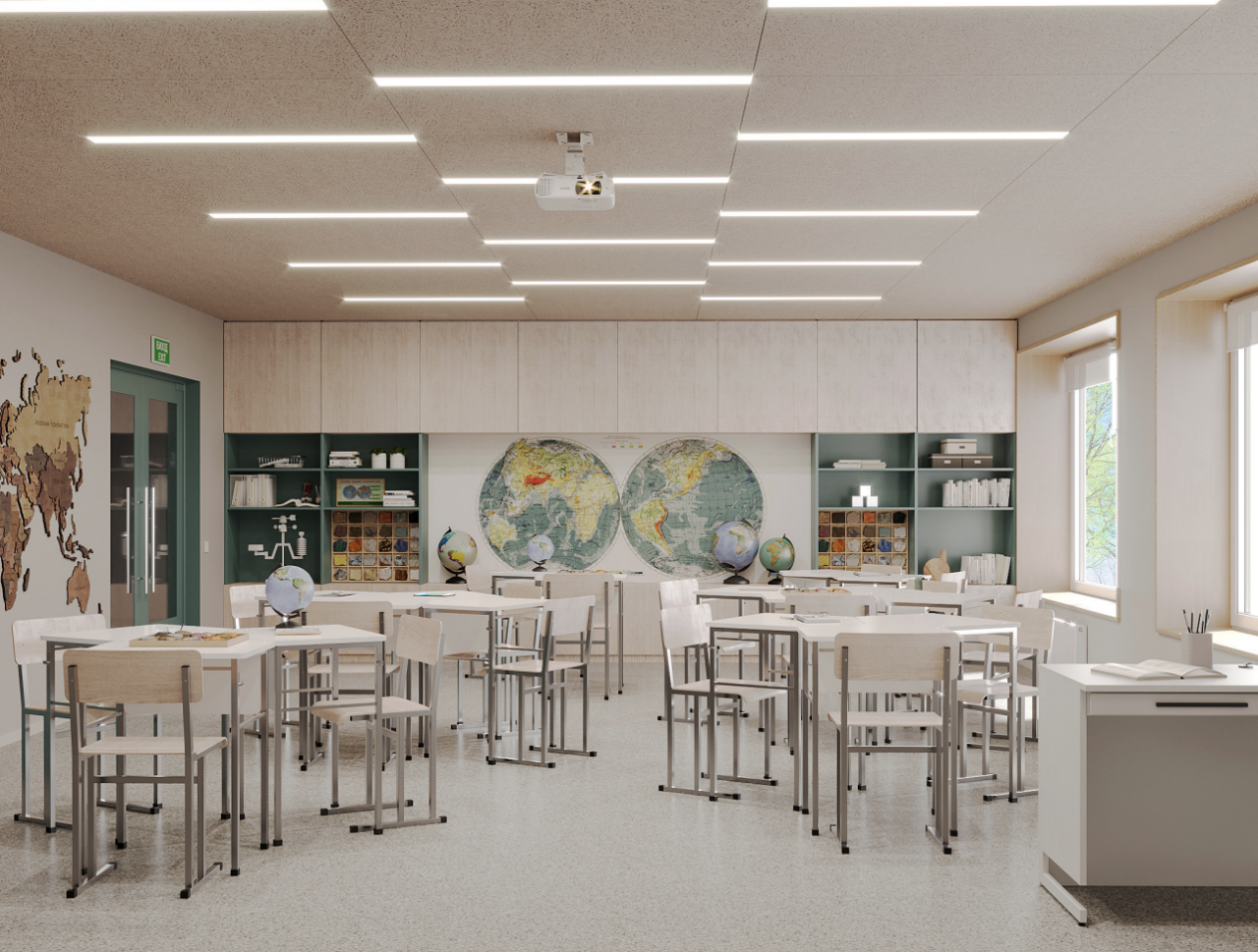
Modern laboratories and STEM learning classrooms are being established in four educational institutions in Zaporizhzhia. This is part of the state’s systemic investment in education and the modernization of school infrastructure. The Modern Learning Spaces project is designed to help educational institutions create laboratories and classrooms based on unified approaches and guidelines developed for modern STEM education. The project covers 250 general secondary education institutions across 22 regions of Ukraine.
In Zaporizhzhia, renovation works are underway at four lyceums. The spaces are being actively prepared for the installation of the necessary equipment and their launch. At Zaporizhzhia Multidisciplinary Lyceum No. 99, for example, mathematics, geography, biology, chemistry, physics, and STEM classrooms are being renovated.
Olena Dziuba, deputy principal of Zaporizhzhia Multidisciplinary Lyceum No. 99, believes that the Modern Learning Spaces project is an investment in Ukraine’s future, particularly in implementing the changes envisioned by the New Ukrainian School (NUS) reform. Modern educational spaces will help put the competency-based approach into practice by enabling students to apply their knowledge and develop critical thinking skills.
“At our lyceum, we aim to create a modern educational environment where theory is connected with practice, and every student has the opportunity to explore, experiment, and develop their abilities. We believe that the future development of engineering, medicine, and the technology sector in Ukraine will depend, to a large extent, on how many young people choose careers in the natural sciences after leaving school,” said Olena Dziuba.
Anzhelika Dieniezhkina, a biology teacher at Zaporizhzhia Multidisciplinary Lyceum No. 99, also has ambitious expectations for the renovated learning spaces.
“We want the upgraded spaces to spark and strengthen students’ curiosity about learning. Today, above all, we lack talented young people who choose to stay in Ukraine, particularly those pursuing careers in the natural sciences. This is especially important for medicine, where biology is at the heart of the profession — and biology is, essentially, the science of life. It is about understanding ourselves, knowing how to raise a child properly, what food to eat, which shampoo to use, and much more. That is why modern classrooms need appropriate equipment that will encourage students not to be intimidated by the complex processes of the natural sciences, but instead to explore theoretical knowledge through hands-on experience. For example, they could conduct an enzyme-linked immunosorbent assay (ELISA) or explore the habitat of a particular nature reserve using 3D goggles. It is important that these experiences influence students’ career choices and inspire them to stay in their home country and contribute to its future,” says Anzhelika Dieniezhkina.
As part of the Modern Learning Spaces project, educational institutions work with the Implementation Support Team (IST). The team helps lyceums navigate every stage of creating modern educational spaces — from planning and organizing renovation works in line with the guidelines of the Ministry of Education and Science of Ukraine to installing the necessary equipment and launching the laboratories.
The work of the IST is supported by the project’s strategic partners, DTEK and Metinvest, which have invested approximately UAH 11 million to help ensure high-quality implementation of the reform at the local level. East Europe Foundation oversees the project’s implementation and coordination: it establishes the IST team, provides expert and methodological support, and ensures quality control. The guidelines and design solutions for the educational spaces were developed by Big City Lab.
The project is currently in its active implementation phase. Starting in September, the renovated learning spaces in Zaporizhzhia region will gradually open their doors to students.
Modern Learning Spaces is a project supporting the development of modern educational spaces in academic lyceums across Ukraine. It is implemented by the Ministry of Education and Science of Ukraine as part of the World Bank-supported program “Enhancing Education Accessibility and Resilience in Ukraine under Crisis” (LEARN), funded, among other sources, through the Ukraine Relief, Recovery, Reconstruction and Reform Multi-Donor Trust Fund (URTF), in partnership with East Europe Foundation and socially responsible Ukrainian businesses.
The project partners include DTEK and Metinvest, part of SCM Group, as well as EPAM Ukraine and Quantum Systems Ukraine. Big City Lab provides advisory and expert support to educational institutions in implementing the project.