



Share
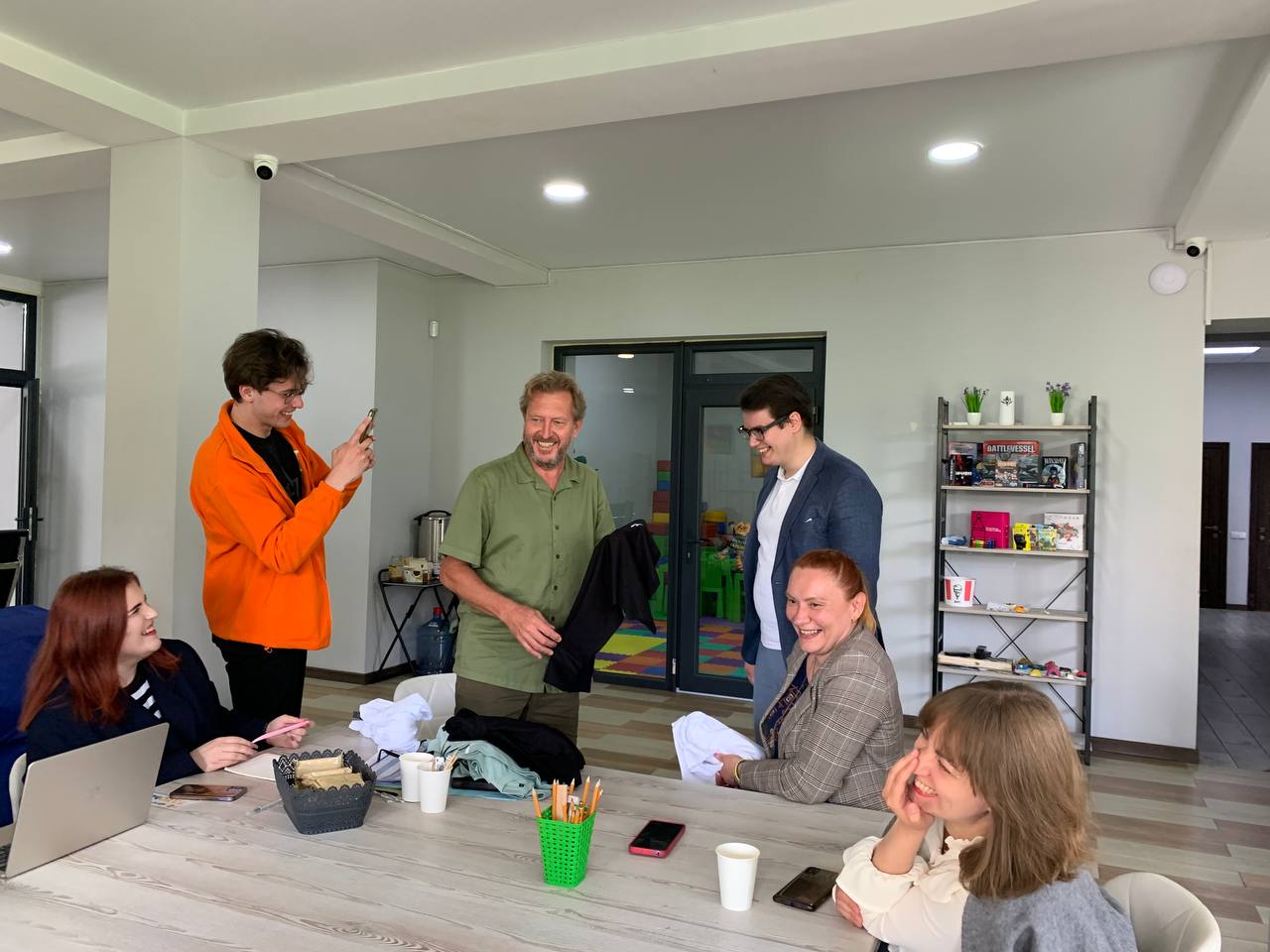
ERIM is a French non-governmental organization (Equal Rights and Independent Media, formerly known as IREX Europe). In 2022, ERIM received funding from the European Union for a major project, Emergency Support of Ukraine. In turn, ERIM provided funding to a consortium of Ukrainian and international organizations, including East Europe Foundation. In Ukraine, this program became known as Resilience and focused on supporting civil society organizations and the media.
Do you remember how your work with the EEF began?
It was actually a bit ironic. We had worked in Ukraine for a long time but stopped around 2014, mainly because stronger organizations stepped in.
Then, when the full-scale invasion began, the European Commission reached out to us asking whether we could help Ukrainian organizations. To be honest, my first reaction was: “We’re probably not the best option for this, because we’ve fallen a bit behind on Ukraine.” There were other candidates who had continued working actively in Ukraine the entire time we hadn’t been there, even in 2022. But it was explained to us that everyone was overwhelmed and that help was urgently needed. So, we agreed.
We were a bit surprised, because we thought there were many organizations that could help Ukraine. Given the scale of emergency assistance required, an organization like ours — able to manage grants and provide support to NGOs and media — was needed. That’s how it all began. Later, we started working with the EEF in particular, and eventually built relationships with all the beneficiaries. It was an incredible experience — one that, unfortunately, arose from the full-scale invasion and the urgent needs on the ground.
Looking back on all these years of working in and with Ukraine, what part of that experience has been the most significant for you — not only professionally, but also personally?
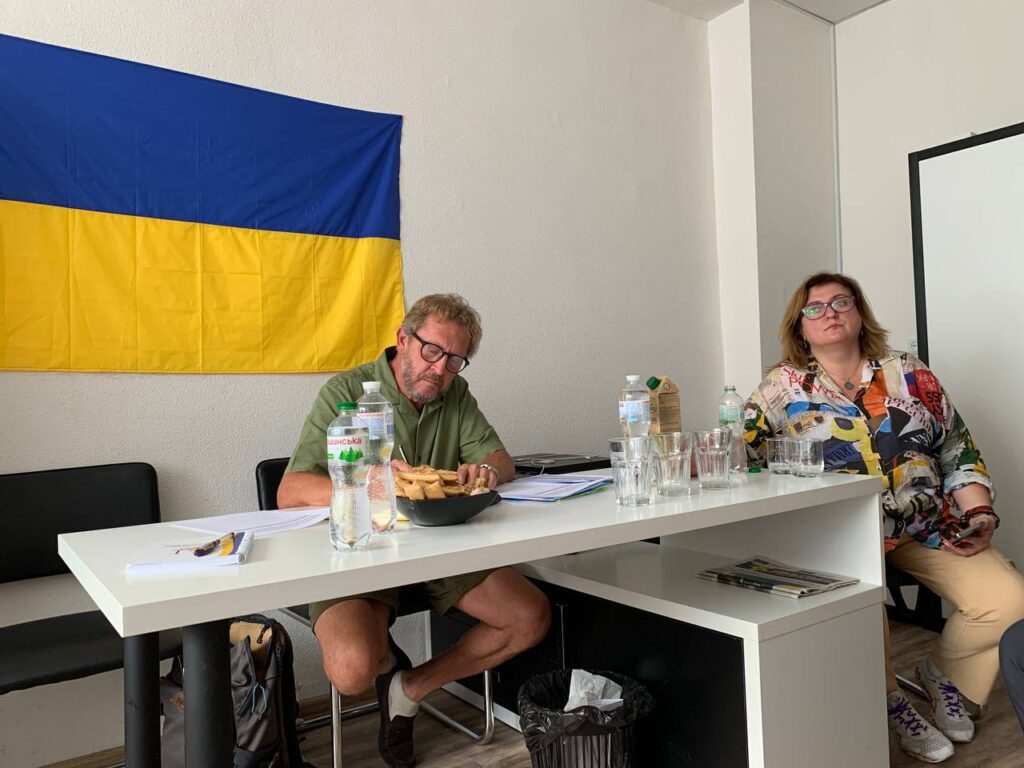
For me, what stands out is the opportunity to witness firsthand the extraordinary resilience of Ukrainian civil society. In France and other Western countries, we often read in newspapers or hear from experts that Ukraine’s civil society is one of the key reasons the country has been able to resist Russian aggression for so long. Of course, the military effort and soldiers’ courage are crucial, but civil society is the foundation that has held everything together.
I remember one trip with Vira Nedzvedska and Victor Liakh — we visited a local cultural center where people of all ages were making camouflage nets. Children, adults, grandparents — everyone was working together. I was deeply moved by that level of dedication and cooperation.
You’ve visited many cities and towns across Ukraine — from Odesa to Yahidne in the Chernihiv region. Many of these places have endured extremely difficult experiences during the war. Are there any stories or encounters that you remember most vividly?
There are so many that it’s hard to choose, but I would highlight three.
The first is a couple from Lviv who were sourcing and delivering medical supplies to hospitals near the front line. We only met the husband because his wife was out on a delivery trip. They were around 40–45 years old, financially secure, both with medical backgrounds. Their son was studying in the U.S., and they could have easily left Ukraine. But they stayed — and that courage left a deep impression on me.
The second is a man from Donetsk, about my age — perhaps that’s why I remember him so well. He had lost everything but was determined to start anew. He established a business center in a new city — with a beautiful park and an annual festival — and was working to rebuild trade connections. Meeting him and seeing his energy and determination to rebuild life was truly inspiring.
The third is two women who survived occupation. Three months after their town was liberated, they founded a women’s shelter and a local community center to provide psychosocial support to people who had experienced trauma. Their resilience and dedication to helping others deeply moved me.
Over the years of war, we’ve heard countless stories of communities and individuals doing incredible things. Yet much of this would not have been possible without assistance — including financial support — from partners and donors. One example is the Resilience program, made possible through ERIM. From your professional point of view, what kind of support is truly effective and creates lasting impact?
From the perspective of an organization like ERIM, the most important thing is to work closely with local partners to understand people’s real needs.
In my view, the most effective support is core funding that allows organizations to use resources where they are genuinely needed. For example, during the war, instead of focusing on training or capacity-building programs, we quickly provided grants for generators when Russian strikes caused power outages and heating problems.
It was crucial that aid could be delivered immediately. So, there isn’t a single program that guarantees impact. What matters is listening carefully to local partners and beneficiaries, trusting their expertise, and responding quickly and flexibly to changing needs. Sticking rigidly to a pre-designed program regardless of local realities is a mistake. If you are adaptive, your support will have a longer-lasting effect.
So, in short: it’s about adaptability and trust in people on the ground?
From the EEF’s perspective, it was slightly different, because it had a more comprehensive approach: listening closely to local needs while also maintaining a focus on training and capacity building.
We discussed a lot how to determine what kind of training and capacity-building would be most effective — especially in a postwar context — to ensure there would be enough qualified people for large-scale reconstruction. This also included ensuring that reconstruction funds would be used effectively and not wasted.
So, in fact, both approaches are necessary: immediate, flexible support to meet urgent needs — and long-term planning to build capacity for the future.
The kind of cooperation you describe seems impossible without trust among all the actors involved — NGOs, local communities, international partners, and organizations. In your view, what helps build that trust? Does it emerge naturally in critical situations, or must it be nurtured?
That’s a complex question. I think the first step is to meet in person and work closely and intensively together.
Because of security restrictions, I was the only member of my team who could travel to Ukraine. But my colleagues worked tirelessly behind the scenes — managing contracts, reporting, redrafting agreements several times as the situation kept changing. What was remarkable was everyone’s attitude: nobody complained. Ukrainian civil society was entirely focused on getting things done, not on lamenting the challenges. The Ukrainian team was deeply committed to its mission — and that dedication quickly earned my team’s trust.
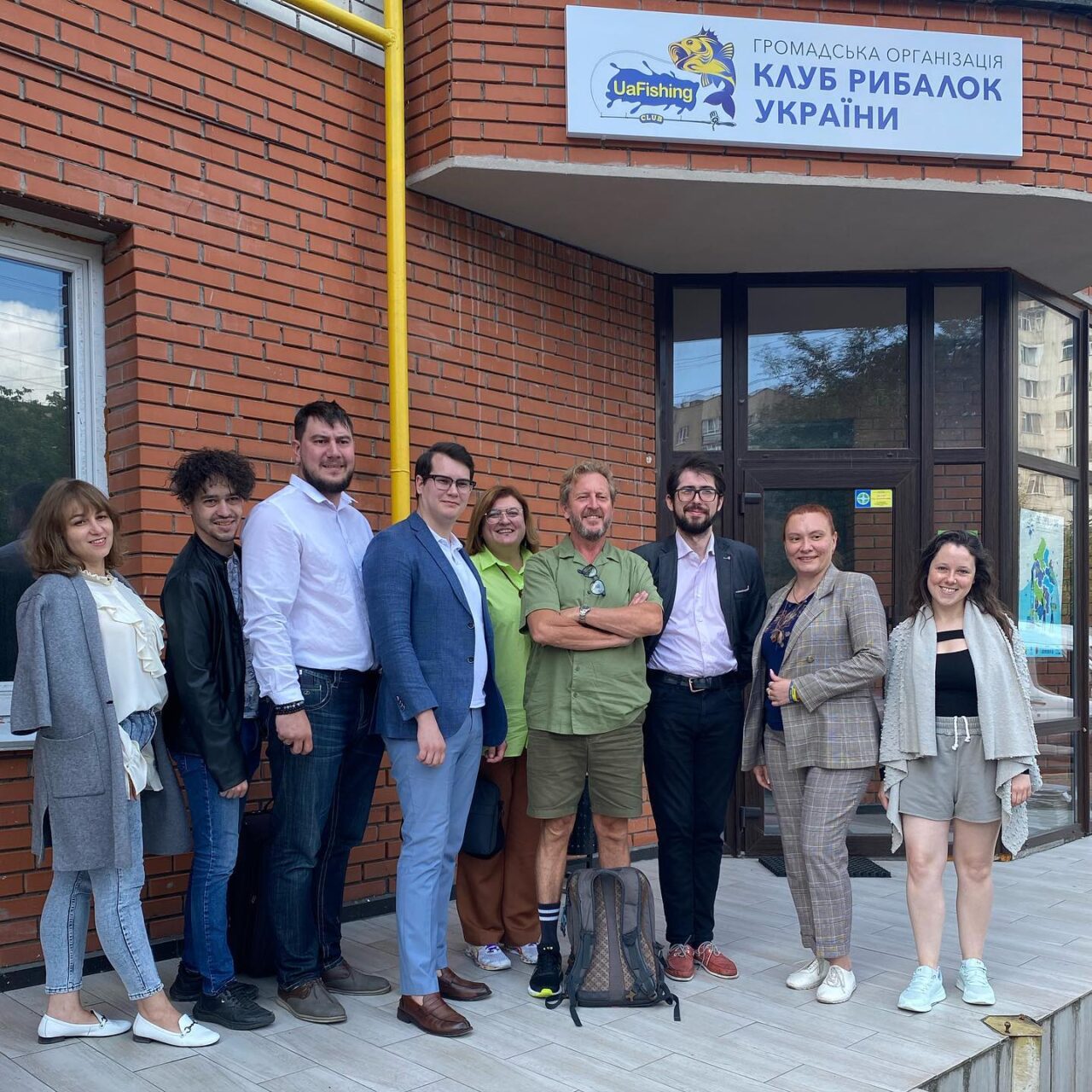
For me personally, trust was built through meeting people like Vira, Victor, Yuliya, Marta, and others — and working side by side with them.
You mentioned 2014. What changes have you observed in Ukraine since then?
It’s like night and day — though it’s difficult to compare, because it’s before the war and during the war.
By 2014, Ukraine had already made significant progress compared to 2008. You could see how the country had flourished — vibrant cultural life in cities, new restaurants and bars opening, young people active and engaged. Economically, the country was also moving forward. The professionalism and motivation of people were striking — from journalists to civil society representatives, from medical professionals to entrepreneurs. They were smart, driven, and dedicated to their communities.
Honestly, if the invasion hadn’t happened and Ukraine had been able to continue its development, it might now be catching up with Poland, which made huge progress after joining the EU.
Ukraine was on a very promising path — and I believe it can return to it.
Thinking about the European context and your work in various countries promoting freedom of expression and human rights — how does the Ukrainian context differ from those experiences? And what can Ukraine learn from the world, given how different its circumstances are?
There’s a lot to learn in both directions. But I think the biggest lesson for Ukraine — assuming the war ends in Ukrainian victory and continued independence, which we all hope for — is not to relax and not to take democracy for granted. The country will still face many challenges we see in France, the UK, Germany, and, unfortunately, the U.S. The threat to democracy is enormous, and the consequences of its collapse are catastrophic. Autocracy is on the rise worldwide.
The key lesson for Ukraine is not to let its guard down once the war ends. Sustaining democracy and good governance requires constant effort, to prevent the rise of oligarchic or other forms of authoritarian rule.
The threats aren’t only external. Many organized forces from other countries, including the U.S., are working to undermine democratic systems. That’s exactly why organizations like ERIM exist — to counteract that.
And what can the world learn from Ukraine?
Sadly, not enough people are learning these lessons — unfortunately. But the lessons Ukraine offers are clear: strength of character, courage, resilience, and determination to fight for one’s values and freedom. Some people do learn from this, some are inspired by it. For instance, I have a friend from Scotland who’s retired and planning to volunteer in Ukraine to help. People like him are deeply moved and motivated by your experience.
But the main lesson — that it takes courage to defend democracy and freedom — hasn’t been heard loudly enough. Perhaps it resonates in Armenia and Moldova or inspires young people in Georgia. But in other countries like Kyrgyzstan or Kazakhstan, that message doesn’t come through as strongly.
Historian Timothy Snyder recently said that “democracy is a daily practice.” Right now, Ukraine is fighting for democracy, because Russia represents everything opposed to our values. It’s literally a matter of survival. That’s why we have no choice but to fight.
Exactly — but people in Europe should also be concerned. Democracy is not automatically stable, even if they grew up believing it was.
You’ve had many interactions with Ukrainian partners. What do you value most in them and in how they continue their work during the war?
I think what I value most is the people themselves. Sometimes I regret not keeping in more regular contact and not being able to travel to Ukraine easily. But I can go as a private individual, and I hope I’ll have the chance to return when possible. I deeply value the human connection and the exchange of experiences. I treasure the memories of shared trips with Vira, Victor, and Yuliya — and the friendship that grew from that. I hope I can call it friendship.