



Share
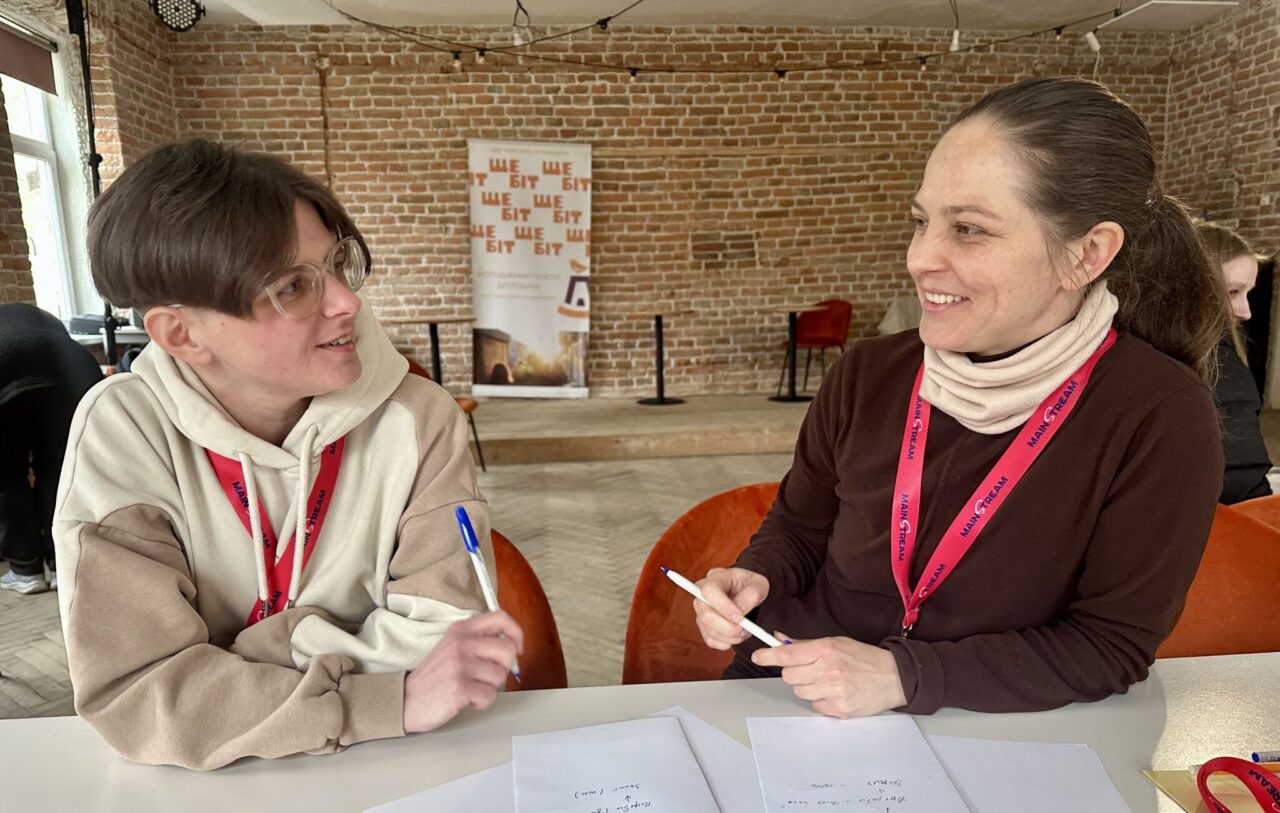
Institutional development accompanies the growth of any organization: it helps to streamline internal processes, ensure stability, and maintain transparency in operations.
The need for institutional development is explained simply by the director of the NGO “Mainstream,” Olesya Lapikova: the organization has grown. There are more projects, people on the team, performers, and partners. Previously, when the team was small, everyone understood who did what and how the processes worked. But as the organization grew, the need arose to be clear not only for themselves but also for volunteers, partners, and donors.
“We realized we were starting to grow: larger projects with more funding were appearing, many performers and people were joining us. The team itself also began to grow. There were more permanent volunteers coming to us. And we started to understand that we were lacking some structure, clarity, and transparency for other people,” explains Olesya Lapikova.
NGO “Mainstream” gained knowledge and resources for institutional development through the project “Phoenix: Power of Communities”, which is implemented by East Europe Foundation and funded by the EU. According to Olesya, this opportunity became an important support: through training, mentorship, and strategic sessions, the team began to understand and assess their work differently.
“The main idea was that in this project, we understood who we want to be. Often our activities were like this: we see a fire – we run to put it out. But now there is planning, strategy, and processes. This allowed us to better understand who we are, what is ours, and what we want to engage in. We now have a better sense of ourselves as an organization,” Olesya explains.
These changes affected both the internal processes of the team and how the organization builds interactions with people around it. It’s not only about volunteers and their involvement in specific activities but also about the community that the NGO forms. These are people who come to the organization, stay, take on different roles, and forge their path together with “Mainstream.”
From Volunteering to Personal Initiative
Iryna Putnoki first got acquainted with the “Mainstream” team in 2020 when she joined the Literary and Music Festival “Toloka” in Zaporizhzhia. As she recalls, it was a significant cultural event that the city lacked. Since then, Iryna has volunteered at the organization’s events and conducted art therapy as part of NGO “Mainstream” activities. She notes that everything happened quite naturally: “They called – I came.”
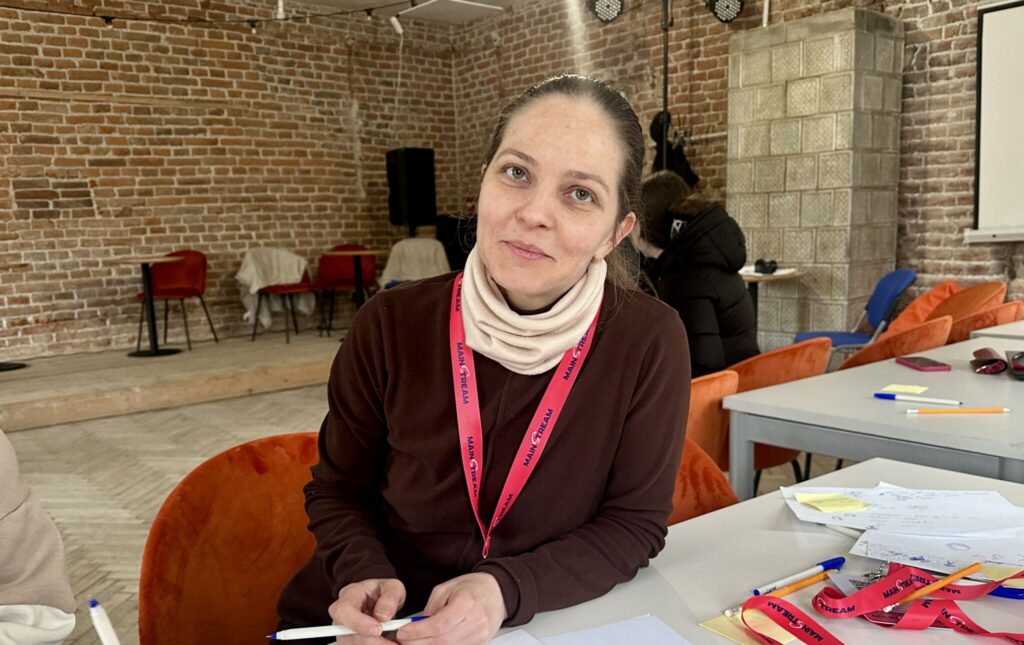
Later, her interest grew not only in the events themselves but also in how they were created. According to Iryna, she began to notice how community organizations truly impact what happens at the local level. She wanted to understand this work more deeply: how project management is organized, how processes are structured, and how the organization works from within. It was then that she began to ask the “Mainstream” team more about how everything works.
An important stage for Iryna was training within the “DIM — Perfect Ideas for the Future” project in 2025. It was there, she explains, that she understood much better how project processes are arranged and how an idea is turned into a project.
That’s when the idea of “We Are. Ukrainianism” was born. Iryna recalls that initially, it was just a thought she shared with the team: a social project to support national communities in the Zaporizhzhia region – both local and relocated. Then came the search for grant opportunities and the joint writing of the idea. And so, the concept grew into a full-fledged project, which is now being implemented by “Mainstream,” with Iryna Putnoki coordinating it.
“As part of the project, we united 20 communities now represented in Zaporizhzhia. It’s a project where creative meetings are held, during which participants depict their belonging to their roots and Ukraine through images and symbols. Additionally, we are collecting migration stories: how people ended up in their region. There are also plans for an art residency, and the results will be compiled into an art book, which will include the stories of the national communities of the Zaporizhzhia region, family migration histories, and creative works,” explains Iryna Putnoki.
A Community That Stays Together
Ludmyla Tymofieieva joined “Mainstream” after relocating to Zaporizhzhia with the Chernihiv community from the Berdyansk district. She currently works as a teacher. As she tells it, getting acquainted with the organization was a natural continuation of the connections the community had tried to maintain after their departure.
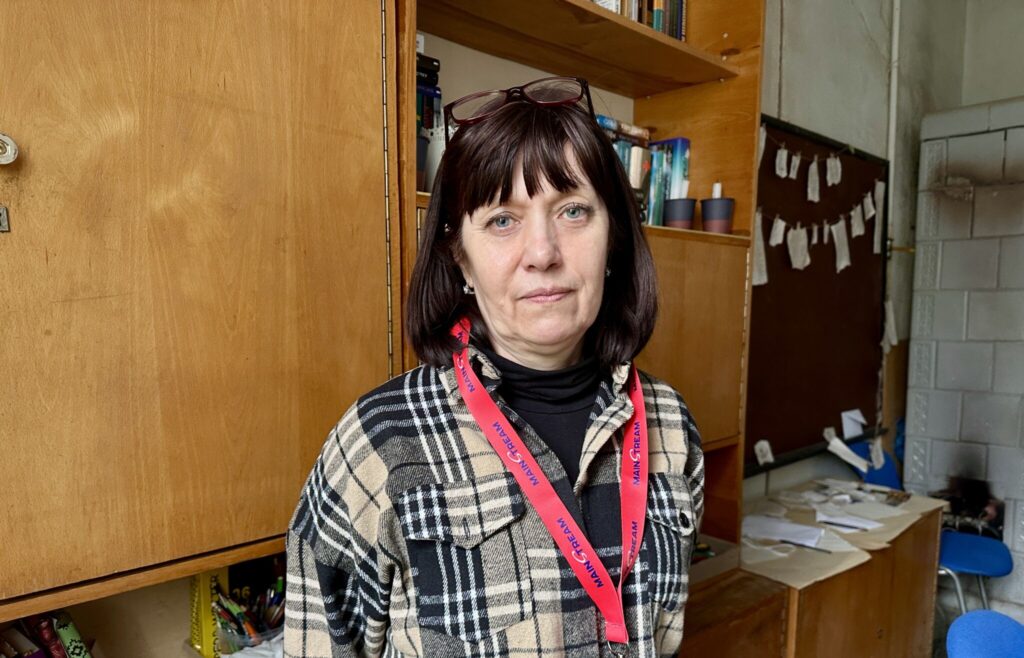
She began participating in the organization’s projects – initially as a participant, and later as a volunteer. These included the “Way Home” project, English classes as part of the “DIM – Perfect Ideas for the Future” project, and artistic events within the “We Are. Ukrainianism” project.
In this activity, what is important for her is not just the events themselves, but how they help maintain ties within the relocated community.
“I really want to go home. My brother was killed, my husband is fighting, and my daughter is a soldier. A lot of people from our community and our village have gone abroad. Some don’t plan to return. It’s very painful. Many have lost hope. And where I used to live, we are now considered enemies of the people. And I want to preserve identity, traditions,” she says.
Ludmyla Tymofieieva also talks about her work with children. As an educator, she often accompanies students to events organized by “Mainstream” and sees how the space helps them open up and make new friends.
“Mainstream” Welcomes Families
For Oleksandr Panchenko, his acquaintance with “Mainstream” also began after relocating to Zaporizhzhia. At that time, he was looking for opportunities for his daughters to help them settle in the new city. Thus, the family began participating in the organization’s programs: his younger daughter attended English classes, and Oleksandr joined entrepreneurship training with his older daughter.
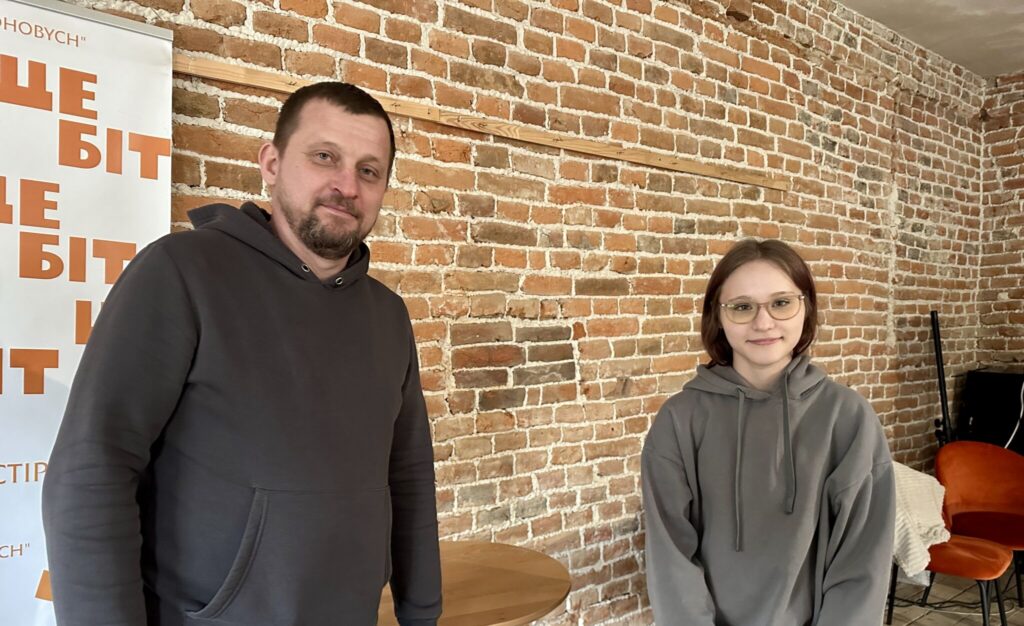
Later, he became more involved in the organization’s work: helping at events, volunteering. As he explains, initially, it was more about supporting the children, but then he wanted to be useful himself.
“When we left, the first days were silent, a kind of stupor… Then they started providing mass psychological support for people. And somehow we got involved with ‘Mainstream,’ and it was appealing,” explains Oleksandr.
For him, what was important was the sense of community, where people could find support, contacts, and new opportunities.
Not an Ideal Picture, but Changes Lived Together
At “Mainstream,” they don’t describe institutional development as a story about perfectly structured processes or easy solutions. On the contrary, it is viewed as a process full of discussions, searching, and rethinking. As Olesya Lapikova says, within this support, the team better understood their areas of responsibility, started paying more attention to roles, planning, and what they want to be as an organization. But at the same time, they preserved what “Mainstream” is built on – the people and the community around it.