



Share
In times of war and limited resources, approaches that direct organisational activities not merely toward completing tasks but toward achieving tangible results for people and communities are becoming increasingly important. In this context, Results-Based Management (RBM) is gaining particular relevance.
This interview explains RBM in simple terms: what this approach entails, the role it plays in project and organisational work, and why results-oriented thinking is essential for organisations with social impact.
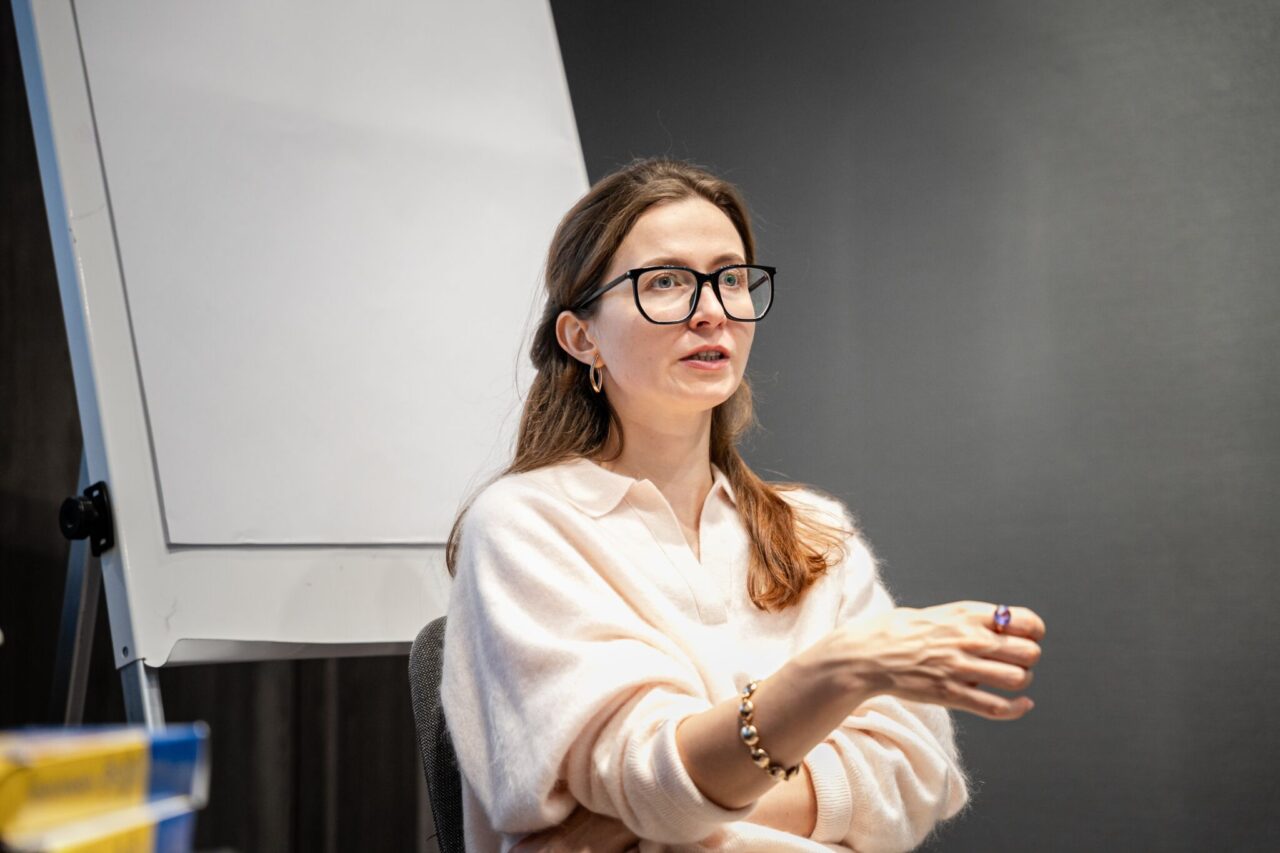
RBM is introduced by Solomiia Borshosh, a specialist in strategic planning and evaluation of institutions and social impact programs, and a researcher in international relations, public diplomacy, and democracy. Within the framework of the project “Phoenix: The Power of Communities,” implemented by East Europe Foundation with financial support from the European Union, Solomiia works with participants of the Institutional Development Program, focusing in particular on results-based management, strategic thinking, and change analysis.
What is Results-Based Management, in simple terms?
Results-Based Management (RBM) is a management approach that focuses not on what we do, but on the changes our actions bring about. It helps plan, implement, and evaluate activities through the lens of results for people—our target groups, institutions, or systems.
Why is this important today?
Since the start of the full-scale invasion, Ukraine has faced more challenges than ever before. Over the past few years, we have seen that the launch of many projects was often determined by available resources, expertise, or team skills rather than by the real needs of target groups or specific sectors. Even more frequently, assistance was provided in inappropriate volumes—either excessive or insufficient.
At the same time, resources have become significantly scarcer. In this situation, the effectiveness of civil society organisations takes on new importance. RBM enables evidence-based decision-making, strengthens accountability, and helps focus on real impact—addressing the needs of specific people and institutions rather than formally “delivering activities.”
In which fields is this methodology most commonly applied?
RBM is widely used in international development, the public sector, reforms, humanitarian and social programs, as well as in project and strategic organisational management.
It is important to note that RBM is one of several management approaches used to manage organisations and projects. In the business environment, you may have heard of RBM’s conceptual “twin”—OKRs (Objectives and Key Results). Other management approaches also exist, but these two are currently the most widely used and recognised among managers in Ukraine.
The key point is that it matters less which specific management framework you choose. What matters far more is that it genuinely serves your team, is useful and understandable to them, and is not unnecessarily complex.
When did Results-Based Management appear in Ukraine, and how did it begin here?
Originating in the field of international development, RBM began to be implemented in Ukraine alongside development projects—through donor programs, public administration reforms, and the development of civil society. Over time, this approach evolved from a purely project-based logic to the level of organisational strategies.
In the 2010s, RBM was already actively used by various donors—from Sida to UN agencies. In the 2020s, I increasingly encounter teams that independently structure their work around achieving results, not always driven by donor requirements.
What are the most common misconceptions about RBM?
The most common misconception is reducing RBM to a set of indicators or donor reporting requirements. In reality, RBM is a management approach that helps teams think more effectively, plan better, and make informed decisions. It has significant potential for internal management and teamwork.
Teams begin to think not in terms of “done / not done,” but in terms of results: what has actually changed as a result of our work, which assumptions did not hold, and what we do next. This stimulates internal reflection, learning, and adaptation.
We often underestimate how powerful a motivator an operational approach to work can be. When people do not understand why certain processes exist or what real change they produce, no team-building activities can compensate for that. RBM addresses managers with a simple but effective call: design processes so that they lead to results, not to the imitation of busyness.
Another common misconception is that an RBM system can function on its own. In reality, it is effective only where leadership is genuinely engaged. Leadership is demonstrated through the willingness to ask questions about results, adjust plans based on data, openly discuss mistakes, and build a culture of learning rather than punishment. This practice ultimately fosters mutual trust—the key foundation of a strong team.
Finally, RBM is often mistakenly viewed solely as a project management tool. In fact, it is equally applicable at the strategic level—when planning begins with understanding target groups, analysing real problems, and formulating achievable results and indicators that guide progress.
What distinguishes “planning backwards” in practice?
The team starts not with activities, but with the desired change in the lives of the people or institutions it serves. In RBM, these levels are referred to as impact—long-term changes in the broader perspective—and outcomes—direct changes in the lives of target groups or beneficiaries.
At first, this “planning backwards” approach may seem difficult or unfamiliar, as it requires abandoning typical solutions, pausing, and honestly answering the question: “Why are we doing this?” Only after clearly understanding the intended impact and outcomes, a correct action plan can be developed.
You may be familiar with the metaphor of a ladder leaning against the wrong wall. Planning backwards helps avoid a situation where significant effort is invested, only to realise in the end that you were moving in the wrong direction and that your “ladder was leaning against the completely wrong wall.”
Why does problem analysis account for 50% of success?
An incorrectly defined problem leads to a well-implemented but essentially unnecessary project—the “wrong wall” mentioned earlier.
I recommend combining data analysis, clear identification of specific beneficiaries (and, therefore, awareness of whom you deliberately do not cover), stakeholder engagement, and validation of key assumptions. The latter is no less important than all the previous elements.
For example, if you conduct 20 training sessions for teachers on changing pedagogical approaches and even create a regulatory framework that allows it, are you certain that school administration or teacher workload management systems will not hinder the change process? If such risks exist, it may be necessary to introduce additional project components or reconsider priorities.
Why is it so important to correctly identify beneficiaries? What changes in management when a team clearly defines its target group?
Without a clear understanding of whom we are working for, it is impossible to correctly formulate the expected results of our work. For example, when working with veterans, it is critically important to understand the needs of a specific group of people rather than rely on assumptions.
Such understanding is formed both through the analysis of research materials (and fortunately, there are already organizations in Ukraine conducting such studies) and through direct conversations with potential direct beneficiaries—not abstract “veterans of Ukraine,” but veterans from a specific district or city, with defined characteristics such as gender, age, approximate income level, and financial situation.
What is a theory of change and how does it work?
A theory of change describes the logic of how our actions are expected to lead to desired changes. Many people are familiar with the concept of an “elevator pitch”—a brief, persuasive presentation used to quickly introduce oneself, a business, or an idea, usually within 30 seconds.
The success of many startups has been largely driven by founders’ ability to clearly and concisely present their project without extensive preparation and secure a meeting with a venture investor—sometimes after a chance encounter near an elevator.
A theory of change is essentially a “30-second pitch” for projects and organisations with social impact. It retains the core idea of the elevator pitch—the ability to succinctly and convincingly explain the essence of your work to an external audience—while aligning with the logic of results-based management. Specifically, it helps explain:
I strongly recommend having a clearly articulated theory of change—both at the project level and at the organizational level. Time invested in its development typically yields multiple returns.
Which organisational practices make RBM effective?
Regular data review, a learning culture, leadership engagement in working with results, and the integration of RBM into strategic and operational management — not only into reports.
How can RBM be prevented from remaining “on paper”?
In short, RBM works only when it is actually used to inform management decisions: adjusting plans, revising priorities, and changing approaches. It is important that both managers and project implementers are involved in this process – each within their scope of responsibility.
Finally, remember the real use of data, not data collected “for form’s sake.” If data are not used for conclusions, learning, and adaptation, it is no longer RBM.
What should be the first steps for an organisation that wants to implement RBM?
Start by identifying your beneficiaries and their key problems. Try to see the situation through their eyes, particularly the challenges they face. Based on this, build the logic of your actions: what exactly you will do and how your activities will contribute to solving the identified problem.
At this stage, be especially critical of yourself: test assumptions, habitual thinking, and established practices.
Next, based on this logic, formulate your project results in a way that allows them to be tracked—both at the level of direct outputs (e.g., number of participants engaged, studies conducted) and at the level of qualitative changes in the lives of people and institutions you serve.
Finally, continuously involve key team members and regularly synchronise efforts — this is what makes the approach truly work.
***
To gain a deeper understanding of results-based management, we recommend taking the course available on the “Zrozumilo!” platform. The program consists of eight short lectures that consistently cover all key elements of RBM – from beneficiary analysis to working with indicators and the practical application of RBM in team management.
This material was prepared within the framework of the project “Phoenix: The Power of Communities,” implemented by East Europe Foundation with financial support from the European Union. The views expressed in this interview do not necessarily reflect the views of East Europe Foundation or the European Union.
The original version of the article was first published on the Hromadskyi Prostir website.